
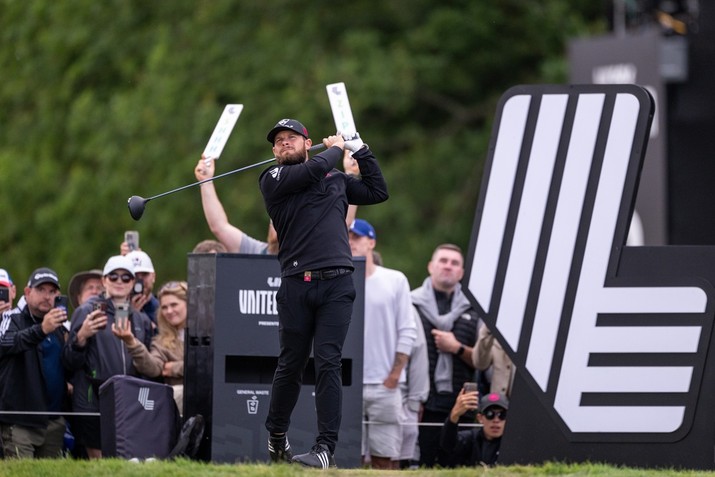
LIV Golf, its name coming from the Roman numerals for 54, launched in 2021 with its first season beginning in 2022. It was a radical new golf league, or tour, where players competed over 54 holes, with no cut, and huge – and we mean seriously huge – paydays guaranteed for anyone who took part. It was going to change golf forever, and with the wealth of its backers, Saudi Arabia’s Public Investment Fund (PIF), it seemed to have the vast resources necessary to achieve its aims.
Or, at least that’s what the PIF and LIV itself thought. What they hadn’t accounted for was the love and loyalty fans and players felt to the European and PGA Tours. More importantly than that, perhaps, was that they simply overestimated the desire for change and something fresh. Tied into that was that the product they offered, specifically the team concept and shorter format, proved not to be the change fans wanted.
Greg Norman was the first CEO of LIV in October 2021, and he was a key figure in the early days of the breakaway tour. His charisma, reputation and presence played a big part in attracting the first players to golf’s brave new world, and he made many promises to them (and anyone who would listen) about LIV being the future of the game. Less than five years later, LIV Golf is all but dead and buried.
LIV Files for Chapter 11
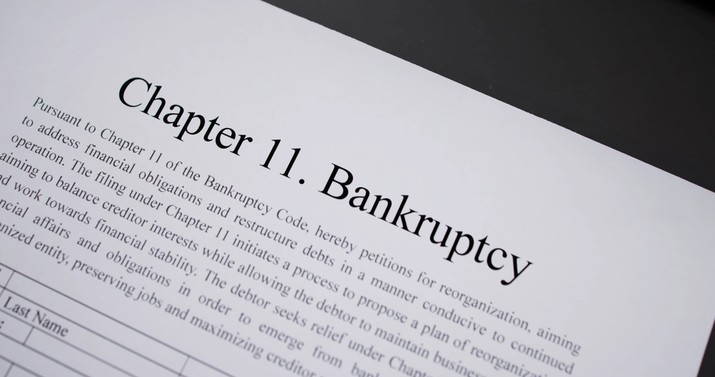
On Tuesday, after weeks or even months of speculation about the tour’s future and probable demise, LIV Golf filed a Chapter 11 petition. This is not quite the same as “going bust”, but it’s not far off!
There is no exact UK equivalent of Chapter 11, but it is certainly different to an entity going out of business, being bankrupt or even entering administration. It is perhaps closest to the latter, though. But there is a key difference that Chapter 11 generally allows the business in question to retain control of itself, rather than being run by an insolvency practitioner.
Chapter 11 is a little less dramatic, and many large US businesses have filed for Chapter 11 before ultimately bouncing back. It is not uncommon in the aviation industry, with large airlines such as Delta, United Airlines, and American Airlines all having gone through the process and come out the other side. General Motors and Hertz have also been through Chapter 11, so it would be unfair to say that there is no hope at all for LIV. That said, it faces some huge obstacles.
Players Owed Huge Sums
Greg Norman argued that top players were overworked and underpaid under the previous status quo. There are many everyday citizens working two (often extremely taxing) jobs to earn less than £30,000 a year who may question that. After all, playing golf is something most players love, and even those ranking outside the top 150 in the world can expect to take home around $400,000 a year.
However, Norman’s argument, supported by many players, and not just those who threw their lot in with LIV, was that the players received a relatively low percentage of the money brought in by the PGA and European Tours. LIV certainly set out to fix that, and the sums offered to those willing to defect were almost obscene.
I am proud to join @livgolf_league and be part of something new that is bringing growth to the sport. I have no doubt that this is a great opportunity for me and my family and am very excited for the future. pic.twitter.com/myf4isJgJ3
— Jon Rahm Rodriguez (@JonRahmOfficial) December 7, 2023
LIV promised to give players a fairer share of the spoils and knew it needed to throw cash at players, given the risks of leaving the recognised tours behind. One of the ultimate reasons for the downfall of the breakaway venture was that they overpaid.
The guaranteed payments, irrespective of performance, to big names such as Jon Rahm, Bryson DeChambeau, Brooks Koepka and Dustin Johnson, could never be sustainable. No matter how successful LIV might have become, the huge contracts they offered were never going to be realistic in the long term.
Now that PIF has withdrawn its support, there was simply no way LIV, or any future investors, could make the numbers add up. At the time of filing for Chapter 11, it is believed the organisation owes at least $45m to players. In the scheme of the approximately $5bn that PIF put into LIV Golf, that is small change, but to some of the players involved the sums are anything but.
Huge Unpaid Bills
In fact, the $45m figure being quoted is just a fraction of the total LIV owes. That figure is the current amount owed to the 14 players who feature in the top 30 of LIV’s biggest creditors. It is not even the full amount, representing the sums not paid just for the third quarter. According to the BBC, “court documents show LIV estimates its assets at $100m-$500m (£74m-£370m) and its liabilities at between $500m and $1bn (£370m-£739m).”
Both assets and liabilities are using rather generous bands for their estimates, so in a best-case scenario they might just about be able to pay what they owe. In contrast, the worst outcome leaves them almost a billion dollars down.
Among the players owed the most are Rahm, DeChambeau, Johnson, Cameron Smith and Tyrell Hatton. That quintet are believed to be owed $7.5m, $5.7m, $5.5m, $4.8 and $3.4m, respectively. And again, that is just for Q3 of 2026.
Players Allowed to Leave
LIV lost PIF backing, beyond the current 2026 season, in April. However, they announced the launch of so-called LIV 2.0 in mid-August. They revealed that they had secured new backers and that LIV 2.0 would relaunch in 2027 as a league that was majority-owned by the players themselves, with investment from BC Partners and possibly others too.
However, due to the high levels of uncertainty, changes in payment structures and unpaid debts, LIV announced that players would be allowed to leave at the end of 2026. Due to the court petition, old contracts will effectively be null and void, with any debts owed to them dealt with through the Chapter 11 process.
That could leave a lot of players seriously out of pocket, but golfers who do not want to continue with LIV are at least now free to walk away. Quite how such players will be received by the other main tours remains to be seen. As does exactly how much of their remaining contract value, if anything, current players ever see.
It seems likely that golfers still owed money may have to pursue that through the courts, and with that likely to be a lengthy and costly exercise, some may decide against it. PIF has delivered almost $50m to help the Chapter 11. However, it seems the initial Saudi backers have been able to leave players high and dry with unpaid contracts that they must have signed off in the first place. The details remain unclear, but while LIV is not quite bust yet, we would not be surprised at all if the 2026 season proves to be its last.