
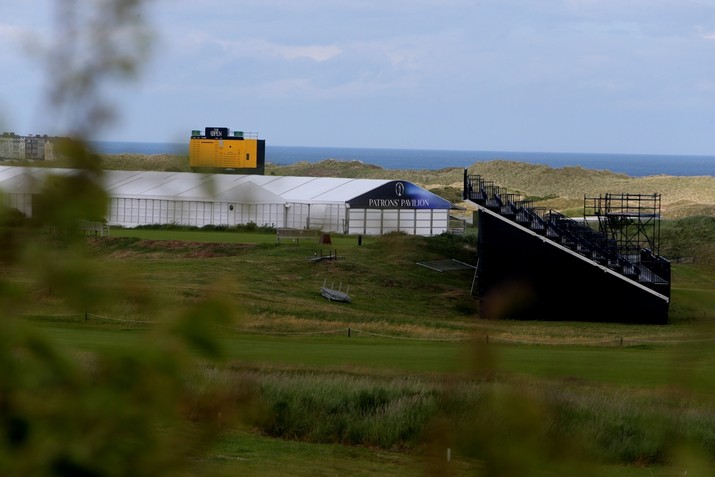
Each of the four golf majors has a slightly different system in place in terms of choosing the host venue. Obviously, the Masters is the most straightforward, as Augusta National is the only course ever used. The US Open and US PGA Championship use a wide range of courses around the country, while the British Open (or The Open Championship, if you prefer) has a roster of venues they use on rotation.
At the time of writing, ten courses are used in rotation. Over the long history of the illustrious championship, often simply referred to as The Open, fourteen courses have been used. But today, the powers that be choose from just ten.
How do They Choose?
 Quite simply, R&A choose which courses will host their flagship championship. The R&A used to be shorthand for the Royal and Ancient Golf Club of St Andrews, with that iconic course considered the home and headquarters of the game. However, in 2004, the R&A group was created as a separate entity from the golf course and took over managing the rules of the game, organising the British Open, and helping to grow and develop the game of golf. The exact mechanics of how they choose which course will stage the next Open are not made clear, but it is obvious that certain factors are considered.
The Open is always staged on a links course on or near the coast, and increasingly, its ability to stage a huge event is a big consideration. That means that it must have appropriate facilities and infrastructure (in terms of access, accommodation and so on). It must be able to properly handle in excess of 200,000 fans over the course of the tournament, and with many
golf courses in relatively remote locations that is often not as easy as it sounds.
The R&A typically announce which course will be staging the event a couple of years in advance. This allows the courses themselves to prepare and fans to make their own plans. The Open rota, as it is known, can and has changed over the years. This has generally been down to the growth of the event, with some of the earlier courses clearly unable to handle such a large-scale event.
For the past 60 years or more, the rota has been reasonably fixed, although nothing is set in stone, and the R&A have made it clear that they are prepared to remove courses if facilities are not up to scratch. Alternatively, they can ask (or, more accurately, demand) that the course makes certain improvements in order to be considered.
Broadly speaking, over the past six decades, Scottish courses have tended to host roughly three years in five, with English courses doing the honours for two. In 2019, Royal Portrush in Northern Ireland hosted its first British Open since 1951 and staged it again in 2025, so this has slightly altered that. Generally speaking, St Andrews, which remains the spiritual home of golf, is used once every five years.
Upcoming Open Venues
The following courses have been chosen for hosting duties in upcoming Opens.
2027 – Old Course at St Andrews
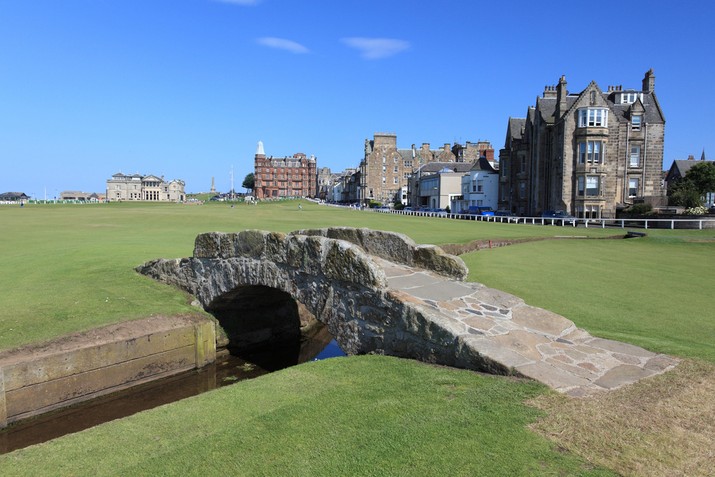
St Andrews first hosted the Open Championship in 1873, doing so again in 1876. Given the first edition of the event was in 1860, it was made to wait a little while, but since then it has become the course used most often by the R&A. Considered by many to be the home of golf, it is located in the northeast of Scotland, in Fife. It is a public course and considered to be the oldest in the world, dating back to the 16th century. The New Course on the same site is a baby by comparison, having been created in 1895.
2028 – Royal Lytham and St Annes
Lytham is one of four English courses on the rota for the British Open and, like two of the other three, is located in the North West of England. It was established in 1886 and held its first Open Championship in 1926. Prior to 2028, it had not held the tournament since 2012, when Ernie Els won. Seve won at Lytham in 1979 and 1988, and the venue has also been used for the Women’s British Open on multiple occasions.
2029 – Muirfield Most Likely
The R&A does not work to a fixed timetable in terms of when the announce future venues. Many expect Muirfield to be picked for 2029, though, with its last Open way back in 2013. Phil Mickelson claimed his fifth major that year, with Nick Faldo (twice), Tom Watson, Jack Nicklaus, Gary Player and Walter Hagen among others to have triumphed at the Gullane course. One issue for Muirfield is the Scottish Open’s use of the nearby Renaissance Club. Another is the somewhat outdated facilities. Muirfield was dropped from the rota due to its refusal to allow women members, but this has since been rectified.
Open Rotation Courses Without a Championship
The following course are all on the Open rotation currently but do not yet have a Championship assigned.
Carnoustie
Carnoustie is located north of St Andrews and Muirfield and is the most northerly course on the rota for the British Open. Established in 1842, it held its first Open in 1931 and, in common with many courses that had had that honour, it has also been used for the Senior Open and Women’s Open. Open icon Tom Watson won his first championship at Carnoustie in 1975.
Royal Troon
Troon’s Old Course first staged the Open Championship in 1923. It avoided being removed from the rota after voting to allow women members in 2016, coincidentally the year Henrik Stenson won his only major at the South Ayrshire venue. The course was set up in 1878, though it had just five holes back then.
Turnberry
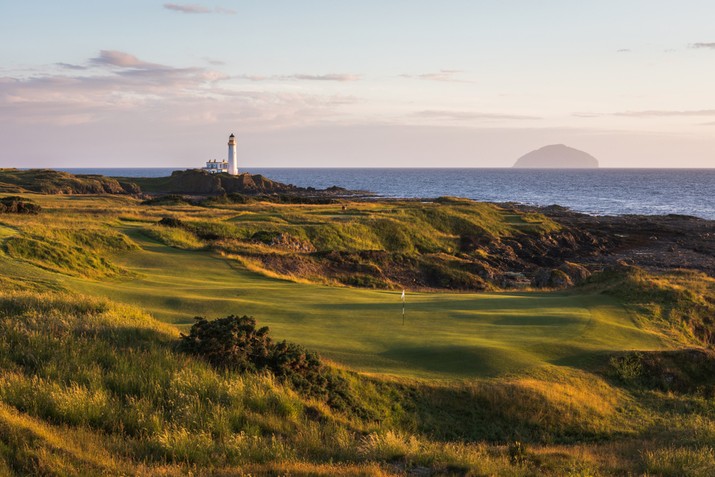
Turnberry, or Trump Turnberry as it has been since 2014, is a stunning and brilliant course south of Royal Troon, another Open venue, on the west coast of Scotland. Created in 1906, it only held its first Open in 1977: the classic “Duel in the Sun” between Tom Watson and Jack Nicklaus. Its last event was in 2009, and whether it is down to Trump’s ownership or a lack of infrastructure, it is unclear when it will be used again.
Royal Portrush
Portrush is the only British Open course outside Great Britain and is located in Northern Ireland. The County Antrim venue held its first Open in 1951 but then had to wait until 2019 to be used again, before Scottie Scheffler won there in 2025. It has also held the Irish Open.
Royal Birkdale
Birkdale is situated in Southport and was built in 1889, holding its first British Open in 1954. 2017 saw it stage the event for the 10th time, with Jordan Spieth taking home $1,845,000, the first time the prize money was paid in dollars.
Royal Liverpool
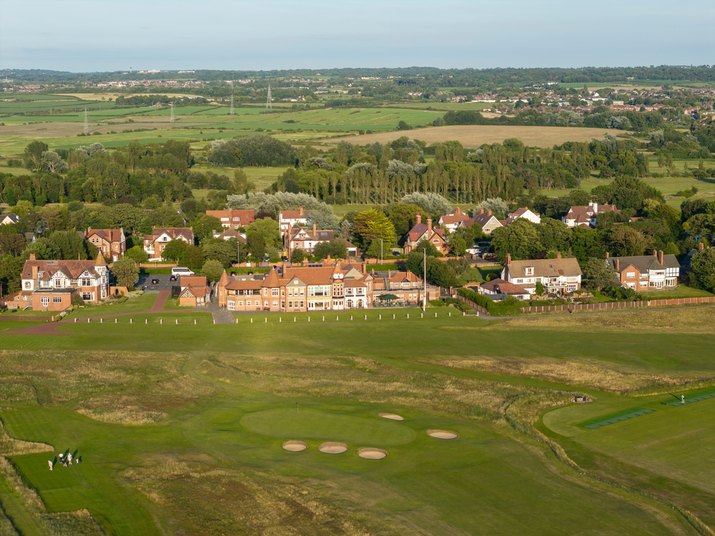
Often referred to as Hoylake, Royal Liverpool dates back to 1869 and is actually situated on the Wirral. It is a tough, challenging course that rewards thinkers, with Harold Hilton winning the first British Open staged there in 1897 and Tiger Woods triumphing in 2006. Prior to Woods winning, it had not held the championship since 1967 due to an infrastructure issue at the course.
Royal St George’s
The most southerly venue for the British Open is in Sandwich, Kent. The first Open was staged there in 1894, just seven years after the course was established. Used in the James Bond film Goldfinger, Harry Vardon, Henry Cotton and Bobby Locke are just some of the historical greats to have triumphed at Royal St George’s.