

Golf is unusual among major sports because it rarely takes a break at the professional level. Other sports often enjoy a couple of months off at least, but golf keeps going almost nonstop. For casual players, the “season” depends on local weather and daylight, but for professionals and fans, competitive golf runs nearly year-round, creating a sport that’s always in play, with constant swings, travel and drama around the globe.
The Recreational Golf Season

For amateur golfers, the concept of a golf season is largely determined by weather and daylight hours. In temperate northern hemisphere climates, the golf season typically begins in early spring when courses become playable after potentially disruptive winter conditions. Ground frost, waterlogged fairways, and short daylight hours make winter golf difficult or even impossible in many regions, effectively creating a natural off-season. This does not necessarily mean taking a complete break, however, as most driving ranges stay open over the winter.
In places like Northern Europe and the northern United States, golf participation peaks between April and October. Courses see their highest traffic during the long, mild days of late spring, summer and early autumn. By late autumn, as temperatures drop and days shorten, participation declines. By the winter, many courses have shut or reduced their opening hours. Some golfers use this time to put their clubs away entirely until spring returns, whereas others stick to the driving range or make use of indoor facilities.
| Region | Main Golf Season |
|---|---|
| Britain | April to October |
| Southern Europe | Year-Round |
| Northern USA & Canada | April to October |
| Southern USA | Year-Round |
| Japan | Spring & Autumn |
| Australia | Year-Round |
| Middle East | November to March |
In warmer climates, such as Southern Europe, the southern United States, Australia, and parts of Asia, golf can be enjoyed comfortably year-round. In these regions, the traditional notion of a “golf season” barely exists for recreational players. Some will avoid the hottest summer months and favour the milder conditions of autumn, winter, and spring, but golf’s relatively low-exertion nature means high temperatures are less of a problem compared to other sports.
This geographical variation means there is no universal answer to when golf season starts or ends for amateur players. It’s very much a localised question, shaped by climate, course conditions, and individual preference. For many golfers, “season” simply means the months when playing is most enjoyable and practical.
The Professional Golf Calendar
At the professional level, the question becomes even more complex because there is no single ‘golf season’ that applies across all tours. Instead, multiple professional circuits operate simultaneously across different regions and time zones, creating overlapping schedules that ensure competitive golf is almost always happening somewhere in the world. The only semblance of a drop-off occurs around the festive/New Year period.
| Tour | Start | Finish | Tour Championship |
|---|---|---|---|
| PGA Tour | January | Mid December | Late August |
| DP World Tour | Late November | Mid November | Mid November |
The PGA Tour has a regular season that runs from January through mid-August, followed by the FedEx Cup Playoffs in late summer, and then the FedEx Cup Fall (Fall Series) that continues into November. Even during the quieter period of December and January, there are typically still some events taking place, although some are in an unofficial capacity, such as the Hero World Challenge.
The DP World Tour (formerly the European Tour) operates on a more global scale, with tournaments across Europe, the Middle East, Africa, Asia, and Australasia. Its schedule runs nearly year-round, with only brief pauses. Technically, its season begins in late November, finishing with the play-offs in early/mid-November. The only noticeable pause occurs as a three-week break around New Year. Meanwhile, LIV Golf, which launched in 2022, operates a more concentrated schedule with a limited number of events running from February through August.
Women’s Golf
Women’s professional golf follows a similar year-round structure, but with a more noticeable winter gap. The LPGA Tour operates for most of the calendar year, with events usually running from late January until mid-December. The Ladies European Tour (LET) typically runs from February through to the end of November, covering a similarly extended competitive window.
| Tour | Start | Finish | Tour Championship |
|---|---|---|---|
| LPGA Tour | January | December | November |
| Ladies European Tour | February | November | None |
The reduced, or even empty, December/January schedule gives top female players a few weeks off either side of the New Year, which can be a welcome break after 10 or 11 consecutive months of action.
The Player Perspective: Managing a Year-Round Sport
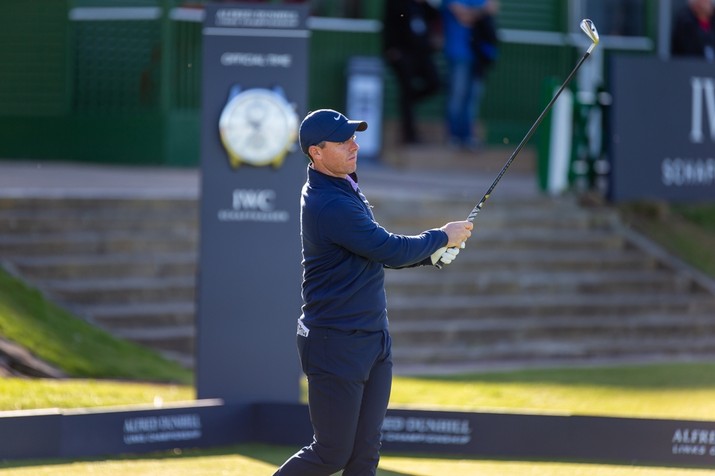
This near-continuous calendar, which only provides a little time off around the festive/New Year period, raises important questions about player welfare and performance management. In sports with defined off-seasons – such as football, basketball, or rugby – athletes have structured periods for rest, recovery, and training. Golf’s rolling calendar doesn’t provide a natural, lengthy break in the same way.
Professional golfers must therefore create their own off-seasons by selectively choosing which tournaments to enter and when to take time away from competition. Top players rarely compete in every available event. Instead, they build schedules around the major championships, flagship tour events, and personal priorities, while incorporating rest periods to manage physical and mental fatigue.
While golf is less physically demanding than contact sports or endurance athletics, it still places significant strain on the body. The repetitive motion of the golf swing can lead to injuries in the back, shoulders, wrists, knees and elbows. The mental demands of maintaining focus and composure over four-day tournaments, week after week, also take their toll. Travel fatigue is another factor as professional golfers spend much of the year moving between time zones, living out of hotels, and adjusting to different course conditions and climates.
As a result, most professionals take extended breaks during quieter periods in the calendar. Some use the late autumn or early winter months to rest and reset. Others take time off after major championships or playoff events. These self-imposed breaks are essential for longevity in the sport, allowing players to recover physically, spend time with family, and return to competition refreshed.
The lack of a mandatory off-season does create risks, however. Younger players trying to establish themselves on tour may feel pressure to compete as often as possible to earn ranking points, prize money, and sponsor commitments. This can lead to burnout or injury if not managed carefully.
What It Means for Fans and the Sport
 For golf fans, the near year-round calendar is both a blessing and a challenge. On one hand, there is almost always meaningful professional golf to watch, whether it’s a PGA Tour event in California, a DP World Tour stop in Johannesburg, or a LIV tournament in Riyadh. This continuity keeps the sport visible and accessible throughout the year.
On the other hand, the lack of a clear seasonal structure can make it harder for casual fans to engage with the sport. Without defined beginnings and endings, it’s less obvious when to tune in or which events matter most. The major championships provide natural focal points, but beyond those four tournaments, the calendar can feel diffuse and difficult to navigate.
From a commercial perspective, the year-round model works well for broadcasters, sponsors, and tour organisations. It ensures consistent content, advertising opportunities, and media coverage. However, it also means the sport competes for attention across the entire calendar rather than dominating a particular season.